There are two prevailing processes for sec-butyl acetate (SBA) production,
i.e. iso-butanol-acetic acid esterification process and n-butene -- acetic acid
addition process. Due to its much lower production cost, new SBA plants usually
use the Addition Process, which is the very technology SL TECH provides. It
consists of four units, feedstock purification unit, esterification unit,
product separation unit and acetic acid recovery unit. Compared to the
Esterification Process, the Addition Process for SBA production has advantages
such as shorter process flow, less equipment and lower production cost (50-60%
of Esterification Process); lower energy consumption (only 5% of Esterification
Process); easy operation, lower maintenance cost and lower operation cost;
harmless and poisonless solid acid catalyst, less pollution, less equipment
corrosion.
Complete Sec-Butyl Acetate Plant Engineering, Procurement & Construction (EPC)
We provide complete EPC solutions for Sec-Butyl Acetate (SBA) production plants, covering the entire project lifecycle from process design, equipment manufacturing, engineering, installation, commissioning, training, to final plant handover.
With extensive experience in ester and solvent production technologies, our EPC team helps investors build reliable, energy-efficient, and cost-competitive SBA plants with stable long-term operation.
Our scope includes:
Process package design
Basic & detailed engineering
Equipment manufacturing & procurement
Automation & control systems
Piping & electrical installation
Utility system integration
Commissioning & start-up
Operator training
Production optimization
After-sales technical support
1. Fixed Bed tubular Reactor To ensure the separation effect in the reactor,
a disc distributor is arranged at the feedstock inlet; to strengthen the heat
exchange effect and better control the temperature in the catalyst bed, baffles
are designed in the reactor shell side; to reduce the energy consumption, two
pre-heating stages are designed, the first stage is the plate heat exchanger
while the second stage is the tubular heat exchanger.
2. Modified Cation
Exchange Resin Catalyst The catalyst is high temperature resistant strong acid
resin modified by metal chloride to prolongitself service life. Also after the
modification, the conversion yield as weel as the selectivity will be increased
at some extent.
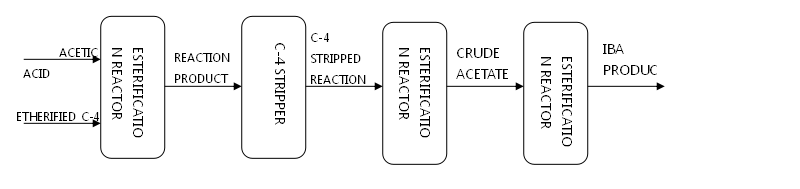
SBA Production Technology
There are currently two major industrial processes for Sec-Butyl Acetate production:
| Process | Characteristics |
|---|
| Esterification Process | Traditional process with higher energy consumption and longer process flow |
| n-Butene Acetic Acid Addition Process | Advanced technology with lower operating cost and higher efficiency |
Our EPC solution adopts the advanced n-butene — acetic acid addition process, which is widely recognized for industrial-scale SBA production due to its economic and operational advantages.
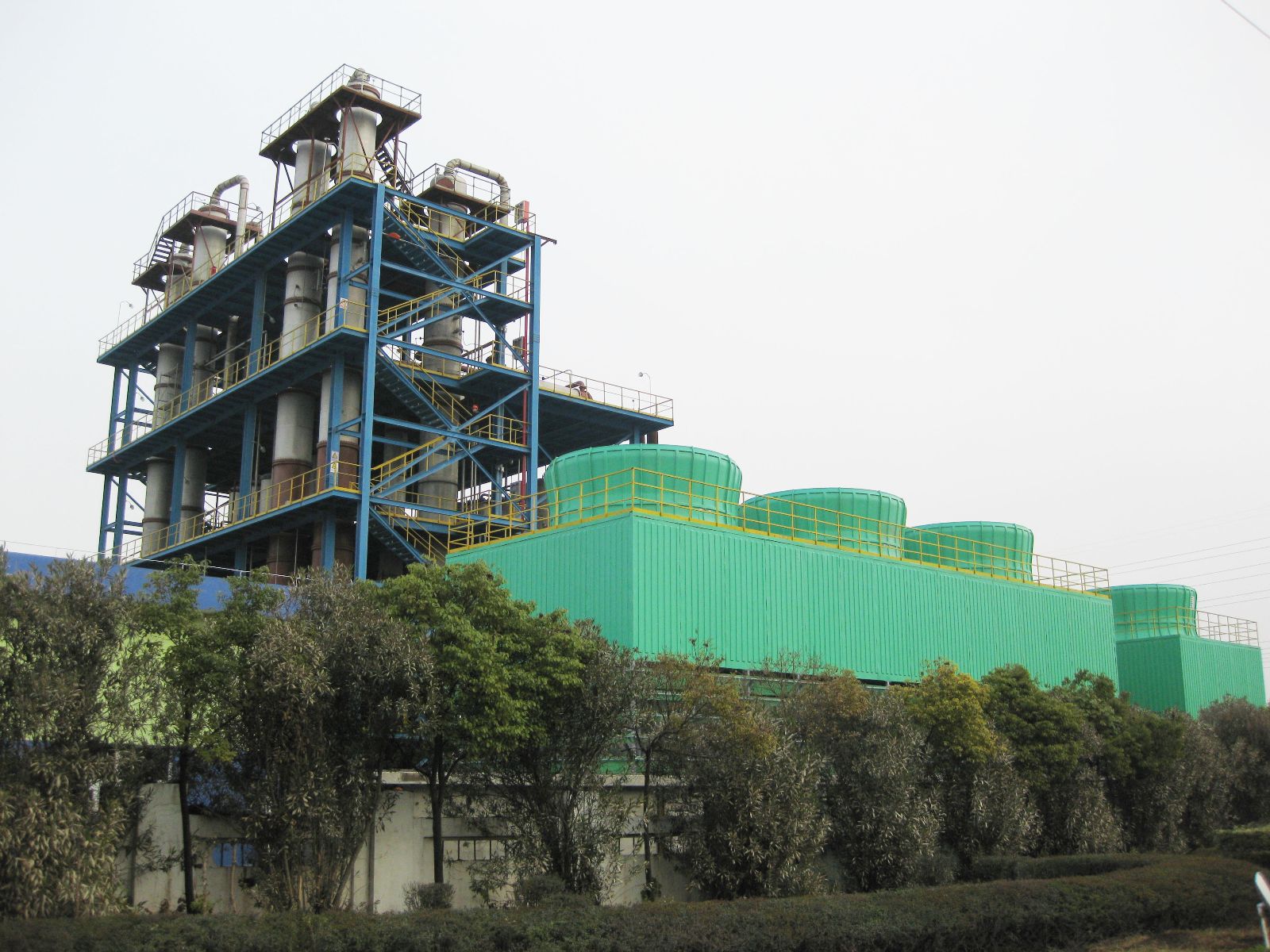
Advantages of Our SBA Plant Technology
Lower Production Cost
Compared with traditional esterification technology, the addition process significantly reduces overall operating expenses.
Advantages include:
Reduced raw material consumption
Lower utility demand
Simplified process configuration
Lower equipment investment
Reduced maintenance workload
Overall production cost can be reduced to approximately 50–60% of traditional esterification technology.
Energy Efficient Plant Design
The process adopts optimized heat integration and staged preheating systems to minimize steam and utility consumption.
Energy-saving features include:
Plate heat exchanger preheating
Tubular heat exchanger secondary heating
Heat recovery integration
Optimized reactor thermal control
Reduced circulation losses
Energy consumption can be reduced to only about 5% of conventional esterification routes under comparable capacity conditions.
Stable Continuous Production
The process is designed for long-term stable continuous operation with:
Fixed-bed tubular reactor system
Advanced temperature control
Optimized catalyst distribution
Automated process monitoring
Stable product purity control
This improves plant reliability while reducing shutdown frequency.
Environmentally Friendly Process
The process uses harmless solid acid catalysts with reduced environmental impact.
Benefits include:
Reduced wastewater generation
Lower corrosion risk
Reduced hazardous emissions
Cleaner production process
Safer operating conditions
EPC Project Scope
1. Feasibility Study & Technical Consulting
Before project implementation, we assist customers with:
This helps investors reduce project risk and improve financial feasibility.
2. Process Design Package
Our engineering team provides complete process design documentation, including:
3. Equipment Manufacturing & Procurement
We provide complete plant equipment supply, including:
Esterification reactors
Distillation columns
Heat exchangers
Storage tanks
Pumps & compressors
Catalyst systems
Utility systems
Instrumentation systems
DCS control systems
All equipment can be customized according to project capacity and local standards.
4. Automation & Intelligent Control
Our SBA plants can be equipped with advanced automation systems for safer and more efficient operation.
Automation features include:
Distributed Control System (DCS)
Real-time process monitoring
Remote operation capability
Alarm & interlock systems
Automatic temperature control
Production data recording
Energy consumption monitoring
5. Installation & Construction
Our EPC team supervises:
This ensures project quality and schedule control.
6. Commissioning & Plant Start-Up
We provide complete start-up services including:
Our engineers assist customers until the plant reaches stable commercial production.
Product Specification
S/N | Item | Specification |
1 | Appearance (Pt-Co) | ≦10 |
2 | Density @ 20oC, g/cm3 | 0.860-0.878 |
3 | Product Purity, wt% | ≧97.5 |
4 | Acidity as acetic acid, wt% | ≦0.01 |
5 | Water, wt% | ≦0.1 |
6 | C-8, wt% | ≦2.2 |
7 | others | ≦0.1 |
| |
|
Specific Consumption
S/N | Item | Consumption Rate |
1 | Acetic Acid (mt/mt @ per ton of 97.5% IBA) | 0.55 |
2 | C-4 (mt/mt @ per ton of 97.5% IBA) | 0.60 |
3 | Demineralized Water (mt/mt @ per ton of 97.5% IBA) | 0.0031 |
4 | Circulating Water (mt/mt @ per ton of 97.5% IBA) | 75 |
5 | Fresh Water(mt/mt @ per ton of 97.5% IBA) | 0.14 |
6 | Steam(1.5MPaG) (mt/mt @ per ton of 97.5% IBA) | 3.70 |
7 | Nitrogen (Nm3/mt @ per ton of 97.5% IBA) | 0.71 |
8 | Compressed Air & Instrumental Air
(Nm3/mt @ per ton of 97.5% IBA) | 6.6 |
9 | Electricity (KWH/mt @ per ton of 97.5% IBA) | 47 |
10 | Esterification Catalyst (kg/mt @ per ton of 97.5% IBA) | 0.55 ( for one load) |
Plant Capacity Customization
We can provide customized SBA plant solutions for different production capacities, including:
Capacity can be customized according to customer investment plans and market demand.
Industries We Serve
Our SBA EPC solutions are suitable for customers in:
Why Choose Our EPC Solution?
Single-Source Project Responsibility
We take full responsibility for the entire project from engineering to final handover, helping customers avoid coordination issues between multiple suppliers.
Faster Project Delivery
Integrated EPC management improves construction efficiency and shortens project schedules.
Reduced Investment Risk
Our engineering and process experience help customers reduce operational and technical risks.
Long-Term Technical Support
We provide continuous technical support after project delivery, including:
Global EPC Cooperation
We support international chemical plant projects with:
International engineering standards
Export packaging
Overseas installation support
Remote commissioning assistance
Multilingual technical documentation
Cooperated with Us
Looking to build a Sec-Butyl Acetate production plant?
Contact our EPC engineering team for:
Process consultation
Plant investment evaluation
Capacity design proposal
Utility consumption analysis
Budget estimation
Customized turnkey SBA plant solution
SL Tec helps customers achieve safe, efficient, and profitable Sec-Butyl Acetate production through reliable EPC project delivery.